Espresso Machine Types Explained
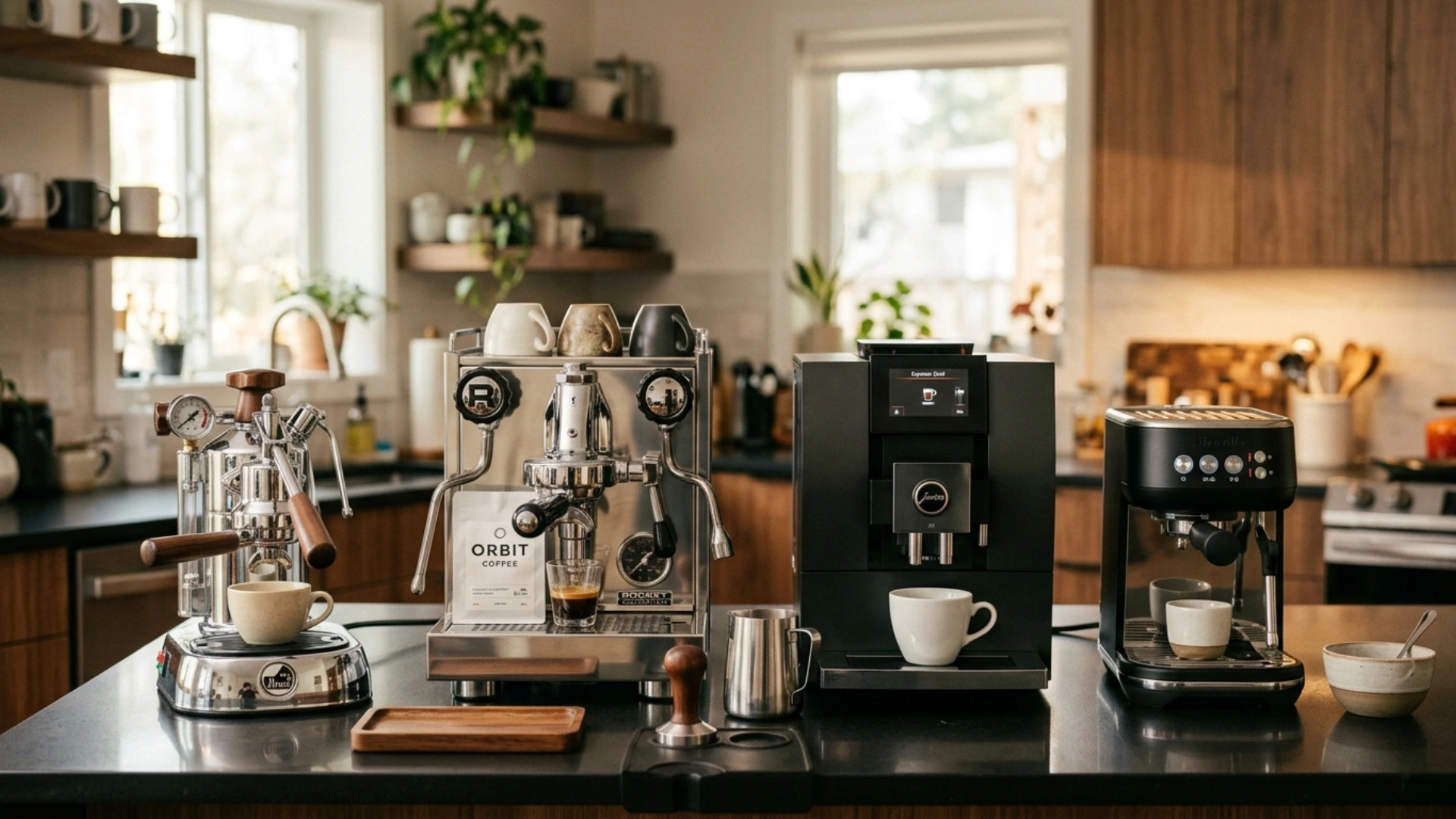
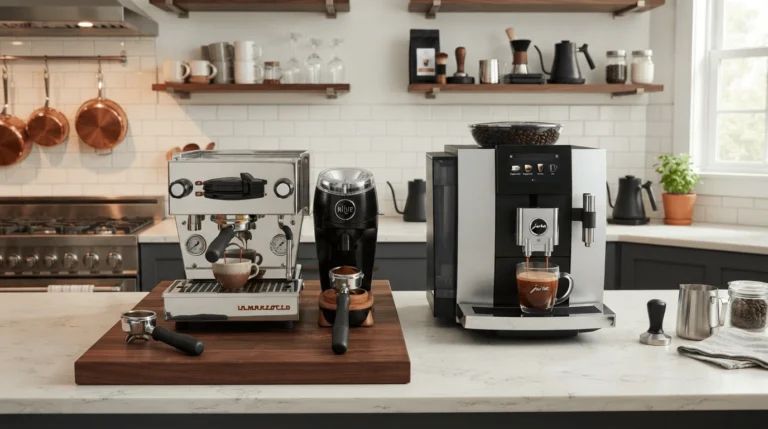
Choosing an espresso machine becomes easier when you understand the main machine types.
Each type offers a different balance of control, convenience, price, and learning curve. Some machines give you complete control over the brewing process. Others automate most of the work. The right choice depends on how you drink coffee, how much control you want, and how much time you want to spend making each drink.
This guide explains the main espresso machine types and what each one does best. It will help you choose a machine that fits your home coffee routine.
The Main Types of Espresso Machines
Home espresso machines generally fall into four main categories:
- Manual espresso machines
- Semi-automatic espresso machines
- Automatic espresso machines
- Super-automatic espresso machines
There are also important differences within these categories. For example, semi-automatic machines can use different heating systems, including single boilers, heat exchangers, and dual boilers.
Understanding these differences will help you compare machines more accurately.
1. Manual Espresso Machines
Manual espresso machines give you the most control over the brewing process. You control the extraction by operating a lever or similar mechanism. Depending on the machine, you may control the pressure and flow of water yourself.
This makes manual machines very different from most modern countertop espresso machines.
Who Are Manual Machines For?
Manual machines suit people who enjoy the process as much as the drink. They can be a good choice if you:
- Enjoy experimenting with espresso
- Want maximum control
- Like traditional brewing methods
- Do not mind a learning curve
- Enjoy hands-on coffee preparation
The main drawback is convenience. You need to learn how different variables affect the shot. Grind size, coffee dose, tamping, water temperature, and pressure can all affect the result. Manual machines also require more attention during preparation.
For someone who wants a quick espresso before work, that extra involvement may become frustrating.
Pros
Cons
If you want maximum involvement, a manual machine can be rewarding.
If you want a simpler workflow, another machine type may suit you better.
2. Semi-Automatic Espresso Machines
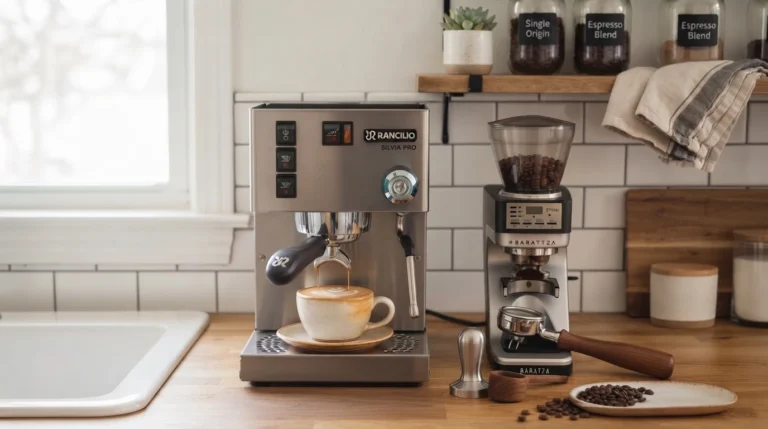
Semi-automatic machines are among the most popular choices for home espresso. They provide a balance between control and convenience. The machine controls the pump and water delivery. You control several important parts of the process.
That usually includes:
- Grinding the coffee
- Measuring the dose
- Distributing the grounds
- Tamping
- Starting and stopping the shot
- Steaming milk when needed
This gives you meaningful control without making the entire process manual.
Why Beginners Often Choose Semi-Automatic Machines
A semi-automatic machine lets you learn how espresso works. You can change the grind size and dose. You can adjust your preparation technique and see how those changes affect extraction.
That makes the learning process useful rather than hidden behind automation. It also gives you room to improve as your skills develop. For many home users, this makes semi-automatic machines a strong middle ground.
Pros
Cons
If you are unsure whether semi-automatic brewing suits you, our comparison of semi-automatic vs super-automatic espresso machines can help you decide.
Internal link: semi-automatic vs super-automatic espresso machines → Semi-Automatic vs Super-Automatic Espresso Machines
Slug: /semi-automatic-vs-super-automatic-espresso-machines/
3. Automatic Espresso Machines
Automatic espresso machines reduce some of the manual work. The machine controls the amount of water used for the shot. You generally start the brewing cycle and let the machine handle the programmed volume. You still need to grind and prepare the coffee on many traditional automatic machines.
That makes them different from super-automatic machines.
Who Are Automatic Machines For?
Automatic machines can suit people who want simpler brewing without giving up all control. They may work well if you:
- Want repeatable shot volumes
- Prefer a simpler workflow
- Still want to use freshly ground coffee
- Do not need extensive automation
- Want more consistency between drinks
The exact level of automation varies by model. Always check what the machine actually automates before buying.
Pros
Cons
Automatic machines sit between traditional hands-on brewing and highly automated coffee preparation.
4. Super-Automatic Espresso Machines
Super-automatic machines focus heavily on convenience. Many models can grind beans, dose coffee, brew espresso, and perform other steps automatically. Some models can also prepare milk drinks with minimal input. You may simply select a drink and let the machine handle most of the process.
This makes super-automatic machines attractive to busy households.
Who Are Super-Automatic Machines For?
They can be a strong choice if you value convenience above hands-on control. They suit people who:
- Want coffee quickly
- Prefer one-touch operation
- Make several drinks regularly
- Do not want to learn espresso techniques
- Want fewer manual steps
The main trade-off is control. You have less direct influence over every stage of extraction. You also need to maintain the machine carefully because more automation means more internal components.
Pros
Cons
If convenience matters more than learning the craft, a super-automatic machine may be the better fit.
Manual vs Semi-Automatic vs Automatic vs Super-Automatic
The differences become easier to understand when you compare them directly.
| Type | Control | Convenience | Learning Curve | Best For |
| Manual | Very high | Low | High | Enthusiasts |
| Semi-automatic | High | Medium | Medium | Home espresso learners |
| Automatic | Medium | High | Low-Medium | Simpler brewing |
| Super-automatic | Low | Very high | Low | Maximum convenience |
These categories describe the general workflow. Individual machines can differ significantly in features and performance.
Espresso Machine Types by Heating System
The machine’s operating style is only one part of the decision. The heating system also matters.
You may encounter:
- Thermoblock systems
- Single boilers
- Heat exchangers
- Dual boilers
These systems affect brewing, steaming, heat-up time, and workflow.
Thermoblock Espresso Machines
Thermoblock systems heat water as it passes through the machine. They can support compact designs and relatively quick heat-up times. That makes them common in smaller home espresso machines. They can work well for people who want a compact machine and do not need heavy steam performance.
However, performance varies between machines. Do not judge a machine only by its heating technology.
Single-Boiler Espresso Machines
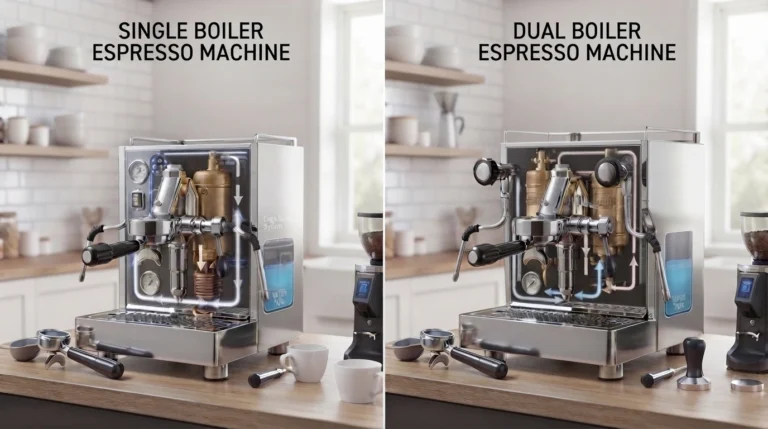
A single-boiler machine uses one boiler for brewing and steaming. Because espresso brewing and milk steaming require different temperatures, the machine normally switches between these functions. That can create a waiting period between brewing and steaming.
Single-boiler machines can make sense if you mainly drink straight espresso or only prepare milk drinks occasionally. They can also offer a useful balance between capability, size, and price.
Heat Exchanger Espresso Machines
Heat exchanger machines use one boiler but separate the brewing water path from the steam system. This allows the machine to brew espresso while steaming milk. That can make a major difference when preparing milk drinks.
Heat exchanger machines often appeal to people who make several lattes or cappuccinos but do not want the size or cost of a dual-boiler machine.
Dual-Boiler Espresso Machines
Dual-boiler machines use separate boilers for brewing and steaming. Each boiler can operate at a temperature suited to its function. This makes simultaneous brewing and steaming easier. Dual boilers can also provide excellent temperature control and strong workflow performance.
The trade-offs include:
- Higher cost
- Larger footprint
- More complex construction
- Greater energy use
For someone making several milk drinks every morning, those advantages may justify the extra investment. For someone making one espresso a day, they may not.
Which Heating System Should You Choose?
Your coffee habits should guide the decision.
| Your routine | Heating system to consider |
| Mostly straight espresso | Thermoblock or single boiler |
| Occasional milk drinks | Thermoblock or single boiler |
| Regular milk drinks | Heat exchanger |
| Several milk drinks back-to-back | Dual boiler |
| Small kitchen | Compact thermoblock system |
| High-volume home use | Heat exchanger or dual boiler |
These are starting points rather than strict rules.
Machine design matters just as much as the heating category.
What About Lever Espresso Machines?
Lever machines deserve a separate mention. They can be manual or spring-assisted, depending on the design.
Traditional lever machines let you influence pressure and extraction through the lever mechanism. They offer an engaging brewing experience. They also require more knowledge and practice than most modern automatic machines.
If you enjoy the ritual of espresso preparation, a lever machine can be fascinating. If your priority is speed, it probably is not the best starting point.
What About Capsule and Pod Machines?
Capsule machines are often included in discussions about home espresso. They offer excellent convenience. You insert a capsule, start the machine, and receive a coffee drink with very little preparation.
However, capsule systems work differently from traditional espresso setups. You have less control over:
- Coffee selection
- Grind size
- Dose
- Distribution
- Extraction variables
They can be useful for people who value simplicity. But they are not the best fit for someone who wants to learn traditional espresso preparation.
Built-In Grinder vs Separate Grinder
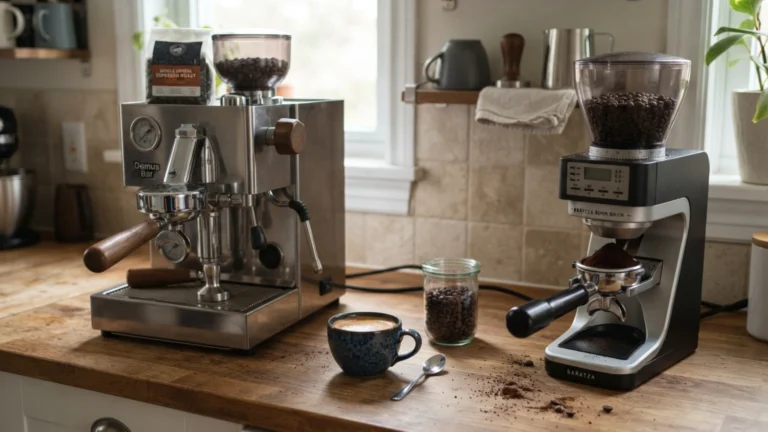
The grinder is another important difference between espresso setups. Some machines include a built-in grinder. Others require a separate grinder. A built-in grinder keeps the setup simple. It can also save counter space.
A separate grinder gives you more flexibility. You can upgrade the grinder without replacing the espresso machine. You can also choose a grinder based on your specific needs.
If you are new to espresso, our guide on choosing an espresso grinder will help you understand what matters before buying one.
Internal link: choosing an espresso grinder → How to Choose an Espresso Grinder
Slug: /how-to-choose-an-espresso-grinder/
Which Espresso Machine Type Is Best for Beginners?
There is no single answer. It depends on what you want from the experience.
Best for Learning
Semi-automatic
You get enough control to learn the fundamentals without managing every part manually.
Best for Convenience
Super-automatic
You can prepare coffee with minimal effort.
Best for Maximum Control
Manual
You control more of the brewing process.
Best for Simpler Traditional Brewing
Automatic
The machine handles shot volume while you still prepare the coffee.
For many beginners, a semi-automatic machine offers the best balance. It gives you room to learn without making the process unnecessarily complicated.
Which Espresso Machine Type Is Best for Milk Drinks?
If you regularly make lattes or cappuccinos, look beyond the machine’s brewing system. Steam performance matters. A machine with a weak steam system can make milk preparation slow and frustrating.
If you make multiple milk drinks, consider a heat exchanger or dual-boiler design.
If convenience matters more than manual milk steaming, a super-automatic machine with an integrated milk system may be more suitable.
Your preferred workflow matters more than the machine category alone.
Which Espresso Machine Type Is Best for Small Kitchens?
Counter space can eliminate some machines before you even compare features. Compact thermoblock machines often work well in smaller kitchens. Some integrated machines can also reduce the space required because the grinder sits inside the espresso machine.
Before buying, measure:
- Machine width
- Machine depth
- Machine height
- Water tank access
- Portafilter clearance
- Steam-wand movement
Do not forget the space needed for a grinder, scale, tamper, and coffee storage.
Which Espresso Machine Type Offers the Most Control?
Manual machines generally offer the most control. Semi-automatic machines come next. They allow you to control important parts of preparation while the machine handles water delivery and pumping.
Automatic and super-automatic machines progressively reduce your involvement. That is not necessarily a disadvantage. More automation simply means a different priority.
Control and convenience usually move in opposite directions.
Common Mistakes When Choosing an Espresso Machine Type
Choosing Based Only on Price
A cheaper machine can become expensive if it does not fit your needs.
Buying Too Much Machine
You may not need a dual boiler for two espressos each morning.
Buying Too Little Machine
A basic machine may struggle with a busy household and frequent milk drinks.
Ignoring the Grinder
The grinder plays a major role in espresso preparation.
Focusing Only on Automation
Convenience matters, but so does your preferred coffee experience.
Ignoring Maintenance
More complex machines can require more cleaning and care.
Choosing Based on Appearance
A beautiful machine still needs to fit your workflow.
A Simple Way to Choose
Ask yourself these five questions:
1. How much control do I want?
More control points toward manual or semi-automatic machines.
2. How much convenience do I want?
More convenience points toward automatic or super-automatic machines.
3. How many milk drinks do I make?
Frequent milk drinks make steam performance more important.
4. How much space do I have?
A small kitchen may favor compact designs.
5. How much do I enjoy the process?
If you enjoy learning espresso, choose a machine that gives you room to experiment.
If you simply want coffee, choose convenience.
Quick Decision Chart
| If your priority is… | Consider… |
| Learning espresso | Semi-automatic |
| Maximum control | Manual |
| Simple traditional brewing | Automatic |
| Maximum convenience | Super-automatic |
| Frequent milk drinks | Heat exchanger or dual boiler |
| Small kitchen | Compact thermoblock machine |
| Few drinks per day | Single boiler or thermoblock |
| Several drinks back-to-back | Dual boiler |
| Minimal equipment | Built-in grinder |
| Upgrade flexibility | Separate grinder |
Final Thoughts
Understanding espresso machine types removes much of the confusion from buying your first machine. Manual machines suit people who enjoy control and experimentation. Semi-automatic machines offer a strong balance between learning and convenience. Automatic machines simplify brewing without removing all involvement. Super-automatic machines focus on speed and ease of use. Your daily routine should decide which direction you take.
Start with how you drink coffee, then consider heating systems, grinder options, counter space, milk drinks, and maintenance. The right espresso machine type is the one that fits your habits rather than the one with the longest feature list.