Do You Need a Grinder for an Espresso Machine?
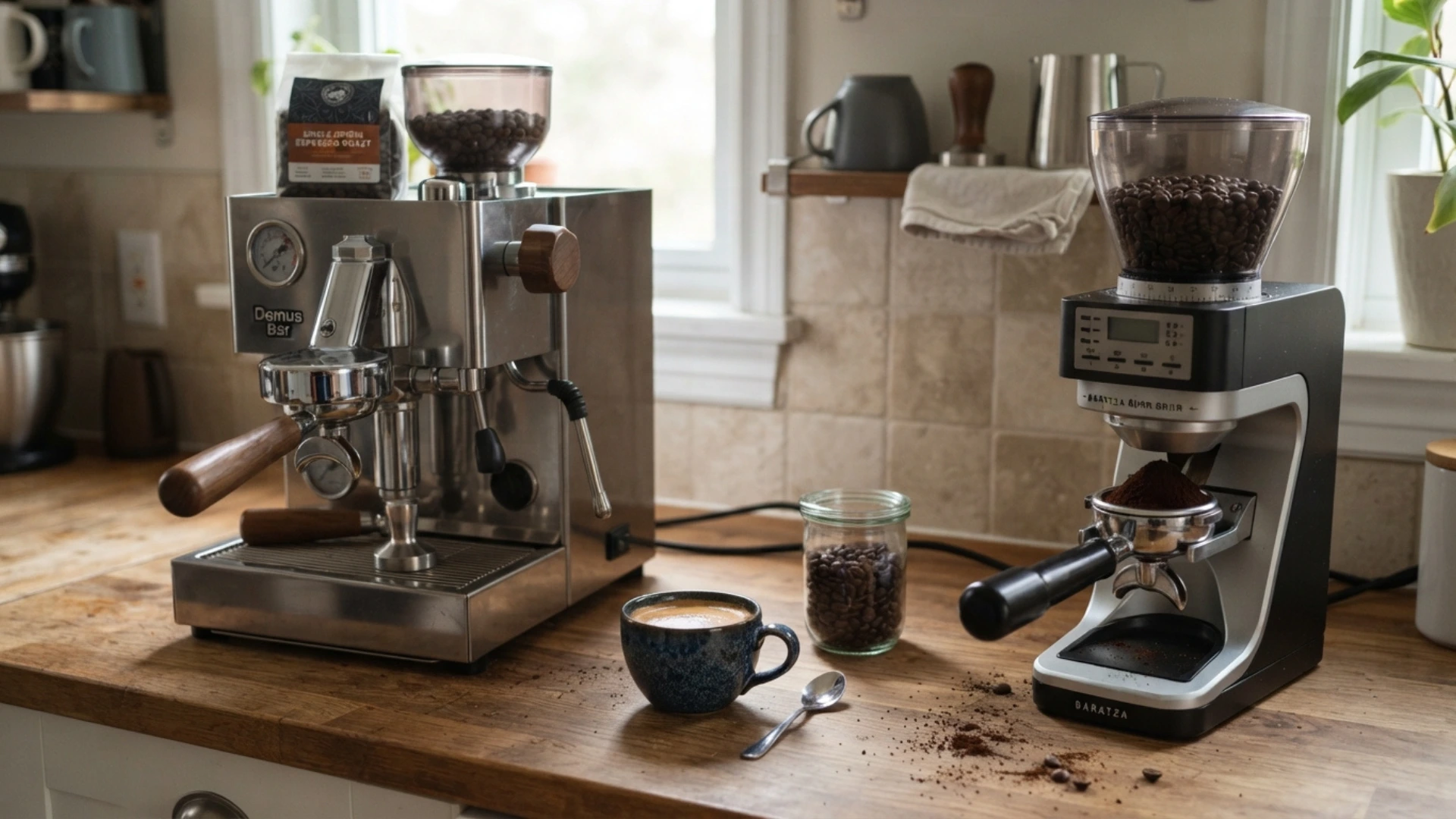
If you are buying your first espresso machine, you may wonder whether you also need a coffee grinder. The answer depends on the type of machine you choose and how much control you want over your espresso.
You can use pre-ground coffee with some machines. You can also buy an espresso machine with a built-in grinder. A separate grinder gives you another option and usually provides more flexibility.
Your grinder controls the size and consistency of your coffee grounds. That makes it one of the most important parts of an espresso setup.
If you want to brew espresso from whole beans, you need a suitable way to grind them. However, you do not always need a separate grinder.
Why Does an Espresso Machine Need a Grinder?
Espresso requires a fine and consistent coffee grind. The grounds create resistance against the brewing water, which allows the water to extract flavor from the coffee during brewing.
Grind size affects how quickly water passes through the coffee. If the grounds are too coarse, water can move through too quickly. If they are too fine, the coffee can create too much resistance. That can change the flavor, texture, and balance of your espresso.
If you are still choosing your first machine, our how to choose an espresso machine guide covers the key features and buying factors you should consider.
Internal link: how to choose an espresso machine → How to Choose an Espresso Machine
Slug: /how-to-choose-an-espresso-machine/
Can You Make Espresso Without a Grinder?
Yes, you can make espresso without owning a grinder. You can buy coffee that has already been ground for espresso and use it with a compatible machine. This approach keeps your setup simple. It also eliminates the cost of buying another appliance.
The trade-off is control.
With pre-ground coffee, you cannot easily adjust the grind when an espresso shot runs too fast or too slowly. Freshly grinding whole beans gives you much more control over the brewing process.
For occasional espresso drinkers, pre-ground coffee may be perfectly practical. For regular espresso drinkers, a good grinder usually makes more sense.
Do You Need a Separate Grinder?
No, not necessarily. You have three common options when setting up an espresso machine:
- Use pre-ground coffee.
- Buy an espresso machine with a built-in grinder.
- Buy an espresso machine and separate grinder.
Each option has different advantages.
| Setup | Convenience | Control | Flexibility | Best for |
| Pre-ground coffee | High | Low | Low | Occasional users |
| Built-in grinder | Very high | Medium | Medium | Convenience-focused users |
| Separate grinder | High | High | Very high | Espresso enthusiasts |
A separate grinder usually gives you the most flexibility. A built-in grinder usually gives you the simplest workflow.
Espresso Machine With a Built-In Grinder
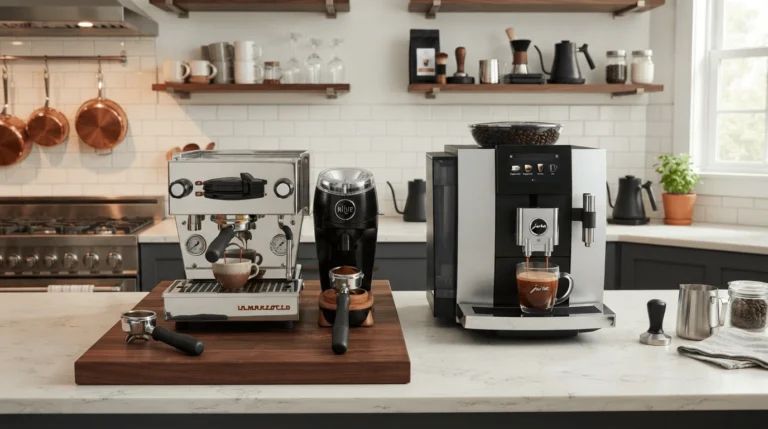
A built-in grinder combines the grinder and espresso machine in one appliance. You can grind your beans and brew your espresso without using a separate grinder. This setup can save valuable counter space. It also keeps your coffee station simple and reduces the number of appliances you need.
Built-in grinders can work particularly well for beginners who value convenience. You still get freshly ground coffee without having to manage two separate machines.
However, built-in grinders vary in quality. You should evaluate the grinder itself instead of assuming the machine includes a good one.
Pros
Cons
A built-in grinder makes sense when simplicity and convenience are your main priorities.
Espresso Machine With a Separate Grinder
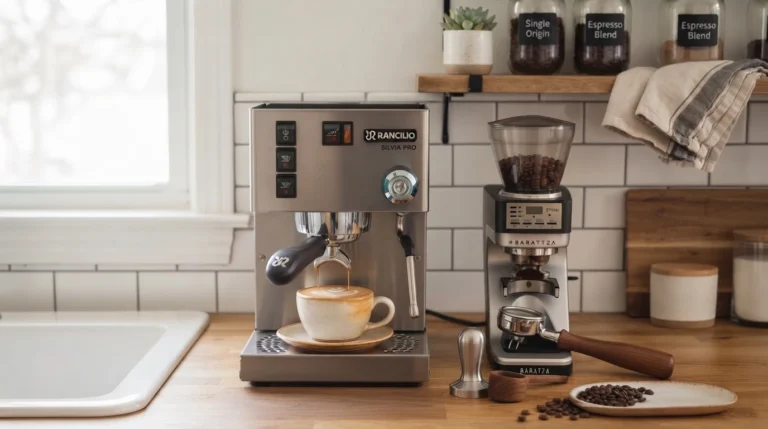
A separate grinder gives you more freedom when building your espresso setup. You can select a grinder based on your budget, coffee preferences, and desired level of control.
Another major advantage is the upgrade path. You can replace the grinder later without replacing your espresso machine. This can become important as your espresso skills improve. You may start with a basic setup and eventually want more precise grind adjustments.
The main disadvantage is the extra cost and counter space. You need room for both appliances and should include both in your overall budget.
Built-In Grinder vs Separate Grinder
Both setups can produce good espresso when you choose suitable equipment and use it correctly. The difference comes down to convenience, flexibility, and control.
| Feature | Built-in grinder | Separate grinder |
| Counter space | Better | Requires more space |
| Convenience | Excellent | Very good |
| Grinder choice | Limited | Wide |
| Upgrade flexibility | Limited | Excellent |
| Setup simplicity | Excellent | Very good |
| Long-term flexibility | Moderate | Excellent |
| Best for | Simple setups | Custom setups |
Neither option is automatically better.
Think about how you actually plan to use your espresso machine before making the decision.
Why Does Grind Consistency Matter?
The grinder does more than make coffee beans smaller. It determines how evenly the beans break into coffee particles.
Imagine a coffee bed containing many tiny particles mixed with much larger pieces. Water will move through those particles at different rates. Some areas may become over-extracted while other areas remain under-extracted. That makes the espresso harder to control.
A consistent grind creates a more predictable coffee bed. It gives you a better starting point when adjusting your espresso.
This is one reason espresso grinders deserve more attention than their small size might suggest.
How Fine Should Espresso Coffee Be?
Espresso generally requires a fine grind. However, there is no single grind setting that works for every espresso machine and coffee bean.
Your ideal setting depends on several factors, including the coffee, roast level, dose, basket, machine, and grinder. Start with a reasonable espresso setting. Then adjust it based on the flow and taste of your shot.
If the espresso flows too quickly, try a slightly finer grind. If it flows too slowly, try a slightly coarser grind. Make small adjustments instead of changing the setting dramatically.
What Happens If the Grind Is Too Coarse?
A coarse grind creates less resistance against the brewing water. This can cause water to move through the coffee too quickly.
You may notice a thin body, weak flavor, or sour and sharp notes. The espresso can also taste under-extracted. If this happens, try grinding slightly finer.
Do not immediately make a large adjustment. Small changes make it easier to understand what is happening.
What Happens If the Grind Is Too Fine?
A very fine grind creates greater resistance. Water may struggle to pass through the coffee at the desired rate.
The espresso may taste bitter, harsh, or overly heavy. The shot may also take much longer to brew. If this happens, try grinding slightly coarser.
Again, change one variable at a time. This makes the adjustment process much easier to understand.
Burr Grinder vs Blade Grinder
If you are buying a grinder for espresso, you will commonly encounter burr and blade grinders. A burr grinder crushes coffee beans between grinding surfaces. A blade grinder chops the beans with a spinning blade.
For espresso, a burr grinder is generally the better choice. Burr grinders usually provide more consistent grounds and better control over grind size.
Blade grinders can work for basic coffee preparation. However, they make precise espresso adjustment much harder.
If espresso is your main goal, choose a grinder designed to give you suitable fine-grind control.
What Should You Look for in an Espresso Grinder?
You do not need every premium grinder feature. Focus on the features that will affect your daily espresso routine.
Fine Grind Adjustment
Espresso often requires small changes in grind size. A grinder with useful adjustment steps gives you greater control over extraction.
Grind Consistency
Consistent grounds make the brewing process easier to repeat. They also make grind adjustments more predictable.
Low Retention
Some coffee remains inside a grinder after grinding. Lower retention can make dosing easier and reduce wasted coffee.
Easy Adjustment
You should be able to change the grind without frustration. A simple adjustment system can make daily espresso preparation much easier.
Suitable Dosing
Think about how you prefer to prepare coffee. Some people grind directly into the portafilter, while others weigh their beans before grinding.
Good Build Quality
A grinder should handle regular use without becoming difficult to operate. You do not necessarily need an expensive model, but you should avoid a grinder that makes espresso unnecessarily difficult.
Do You Need an Expensive Espresso Grinder?
No. A higher price does not automatically guarantee better espresso. However, the grinder is not something you should choose based only on the lowest price.
If your budget is limited, consider the entire espresso setup. A moderately priced machine with a capable grinder can make more sense than an expensive machine paired with a poor grinder.
The grinder becomes especially important if you want to learn how to adjust and improve your espresso.
Should You Spend More on the Grinder or Machine?
There is no universal spending ratio that works for everyone. Your espresso machine controls important factors such as water delivery, temperature, pressure, and steaming. Your grinder controls the size and consistency of the coffee grounds.
Both affect the final drink. If you already own a capable espresso machine, upgrading the grinder may provide a meaningful improvement. If you are starting from scratch, create a balanced budget for both components.
Do not spend almost your entire budget on the machine and treat the grinder as an afterthought.
How Does Your Espresso Machine Type Affect Your Grinder Choice?
Your machine type can influence how much grinder control you need.
A semi-automatic machine usually requires you to grind, dose, distribute, and tamp the coffee yourself. That makes grinder quality particularly important.
Automatic and super-automatic machines reduce much of this manual work. Many super-automatic models include their own grinders.
If you are unsure which machine suits your routine, our guide to espresso machine types explains the main differences between the common machine categories.
Internal link: espresso machine types → Espresso Machine Types Explained
Slug: /espresso-machine-types/
Do You Need a Grinder for a Semi-Automatic Machine?
In most cases, yes. A semi-automatic machine gives you more control over the brewing process. You normally prepare the coffee yourself before starting the shot.
That usually means grinding the beans, measuring the dose, distributing the grounds, and tamping them. You can use pre-ground coffee if your machine supports it. However, a suitable grinder gives you much more control over extraction.
If you plan to make espresso regularly, a good burr grinder is usually worth considering.
Do You Need a Grinder for an Automatic Machine?
It depends on the machine. Some automatic espresso machines include built-in grinders. Others use pre-ground coffee.
Always check the machine specifications before buying.
The word “automatic” does not always mean the machine includes a grinder.
Do You Need a Grinder for a Super-Automatic Machine?
Usually, you do not need a separate grinder. Most super-automatic machines include an integrated grinder. The machine can grind, dose, and brew the coffee with minimal manual work.
This setup is ideal for people who value convenience.
You give up some control compared with a traditional espresso setup, but the workflow becomes much easier.
What If Your Kitchen Has Limited Counter Space?
Counter space can influence your grinder decision more than you might expect.
A separate grinder needs its own space beside the espresso machine. You also need enough room to operate the machine, fill the grinder, and prepare your coffee.
A built-in grinder can reduce the overall footprint.
If you have a small kitchen, our guide to best compact espresso machines can help you find machines designed for tighter spaces.
Internal link: best compact espresso machines → Best Compact Espresso Machines
Slug: /best-compact-espresso-machines/
Can You Upgrade a Built-In Grinder?
Upgrading a built-in grinder is usually more difficult.
The grinder forms part of the espresso machine, so you cannot simply replace it with another model. A separate grinder gives you much more freedom. You can keep your espresso machine and upgrade the grinder later.
This makes a separate setup attractive for people who expect their espresso skills to develop over time.
Does Fresh Grinding Really Matter?
Fresh grinding can help preserve the flavor and aroma of coffee. Whole beans generally protect their flavor better than coffee that has already been ground.
Grinding immediately before brewing also gives you control over the grind size. That control matters when you change coffee beans or adjust your espresso recipe.
Fresh grinding therefore offers two important benefits: better freshness and better control.
How Do You Dial In an Espresso Grinder?
Dialing in means adjusting your grind and preparation until the espresso tastes balanced.
The process does not need to be complicated. Start with a consistent dose and preparation method. Brew a shot and observe how the coffee flows.
If it runs too quickly, try a finer grind. If it runs too slowly, try a coarser grind. Taste the espresso after each adjustment.
Most importantly, change one variable at a time. If you change the grind, dose, and tamping together, you will not know which change affected the result.
A Simple Espresso Grinder Adjustment Process
Step 1: Start With a Baseline
Choose a reasonable espresso setting on your grinder.
Step 2: Keep the Dose Consistent
Use the same amount of coffee while testing different grind settings.
Step 3: Prepare the Coffee Consistently
Try to keep your distribution and tamping method similar for each test.
Step 4: Brew the Shot
Watch how the espresso flows from the portafilter.
Step 5: Taste the Espresso
Look for balance, sweetness, acidity, bitterness, and body.
Step 6: Make a Small Adjustment
Change the grind slightly and brew another shot.
This simple process helps you understand how your grinder affects the final cup.
Common Espresso Grinder Buying Mistakes
Buying a Blade Grinder
Blade grinders make precise espresso adjustments difficult.
Choosing Only by Price
The cheapest grinder may not provide the consistency required for espresso.
Ignoring Grind Adjustment
Espresso often requires small changes in grind size.
Buying a General Coffee Grinder
Some grinders work well for drip coffee but cannot provide enough control for espresso.
Forgetting Counter Space
A separate grinder adds another appliance to your coffee station.
Ignoring Maintenance
Coffee grinders need regular cleaning to maintain good performance.
Changing Too Many Variables
Change one thing at a time when dialing in espresso.
Which Grinder Setup Is Best for You?
The right setup depends on your priorities. If you want simplicity, a built-in grinder can be an excellent choice. If you want greater control and an easier upgrade path, a separate grinder makes more sense.
| Your priority | Better choice |
| Maximum convenience | Built-in grinder |
| Limited counter space | Built-in grinder |
| Simple setup | Built-in grinder |
| Greater grinder choice | Separate grinder |
| Future upgrades | Separate grinder |
| More grinding control | Separate grinder |
| Learning espresso | Separate grinder |
| One appliance | Built-in grinder |
There is no universal winner.
The best setup is the one that matches your budget, kitchen, coffee habits, and desired level of control.
Final Thoughts
You do not always need a separate grinder, but you need a suitable way to grind coffee if you want to brew espresso from whole beans. A built-in grinder offers simplicity and saves counter space, while a separate burr grinder gives you more flexibility and an easier upgrade path. If you want to learn traditional espresso, a semi-automatic machine paired with a capable grinder can be an excellent starting point.
If convenience matters most, an integrated grinder or super-automatic machine may suit you better. Choose the setup that fits your budget, available space, coffee habits, and desired level of control.