Best Compact Espresso Machine
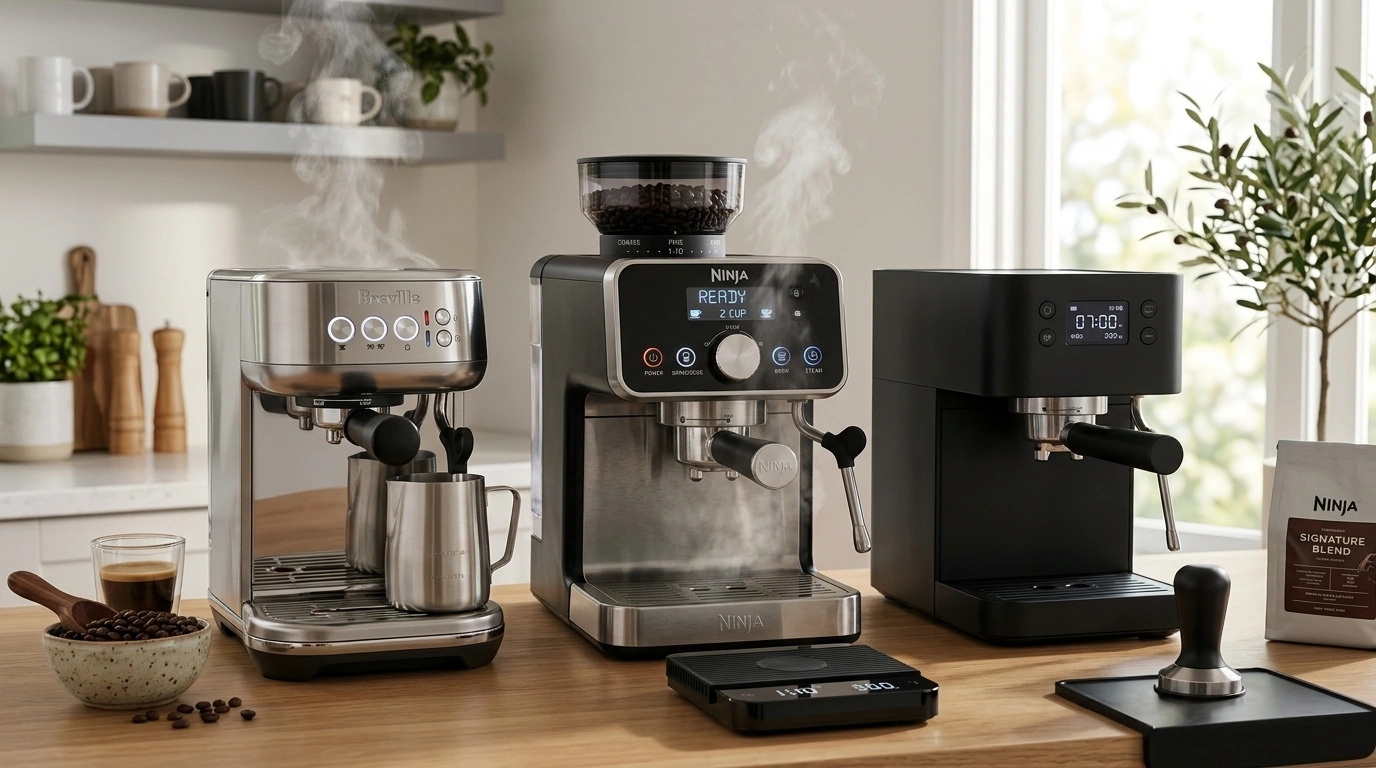
Limited counter space should not stop you from making good espresso at home. A large espresso machine can quickly take over a small kitchen. The machine needs space, but so does the grinder, coffee, and other accessories.
The good news is that several compact machines can deliver excellent espresso without consuming your entire counter. We compared compact models based on their footprint, espresso workflow, milk preparation, ease of use, and overall value.
Our picks include traditional espresso machines, budget options, capsule machines, and a portable manual option.
Quick Picks Top Compact Espresso Machines
| Espresso Machine | Best For | Dimensions (W × D × H) | Grinder | Milk System |
| Breville Bambino Plus | Best Overall | 7.68 × 12.2 × 12.2 in | Separate | Automatic/manual |
| Breville Bambino | Best Value | 6.3 × 13.7 × 12 in | Separate | Manual |
| De’Longhi Dedica Duo | Narrowest Traditional Pick | 5.9 × 13 × 12 in | Separate | Manual |
| De’Longhi Stilosa | Best Budget | 8.1 × 13.5 × 11.2 in | Separate | Manual |
| Nespresso Essenza Mini | Smallest Easy Option | 3.3 × 12.8 × 8 in | None | None |
| Wacaco Picopresso | Best Portable | 2.8 × 3.07 × 4.17 in | Separate | None |
What Makes a Compact Espresso Machine Worth Buying?
A compact espresso machine should do more than occupy less counter space. It should fit naturally into your kitchen and remain practical for everyday use. That means looking beyond width.
Width
Width determines how much counter length the machine occupies. It matters most when you have a narrow working area.
Depth
Depth tells you how far the machine extends toward the front of your counter. This measurement can matter more than width on shallow counters.
Height
Height matters when you have cabinets above the machine. You also need enough clearance to remove the water tank or operate the machine comfortably.
Operating Clearance
The machine itself is not the entire footprint. You need room to insert the portafilter, steam milk, place a cup, and remove the water tank.
Grinder Space
A compact espresso machine with a separate grinder still needs room for that grinder. This is why the complete coffee setup matters more than the machine’s dimensions alone.
If you are still learning the different designs, our guide to espresso machine types can help you understand the main options.
Internal link: espresso machine types → Espresso Machine Types Explained
Slug: /espresso-machine-types/
Ease of Daily Use
A machine can be extremely small but frustrating to use. We favor compact machines that save space without creating unnecessary workflow problems.
Our Compact Espresso Machine Picks
1. Breville Bambino Plus
Best Overall Compact Espresso Machine
The Breville Bambino Plus is our top compact espresso machine for most home users. It combines a small footprint with features normally found on larger machines.
The machine uses a 54mm portafilter and heats quickly. Its automatic steam wand can also texture milk with adjustable temperature and texture settings. That makes it especially attractive for people who regularly make lattes and cappuccinos.
Its compact body also makes it easier to fit into a crowded kitchen. The main limitation is simple. You need a separate grinder.
Key Specifications
| Specification | Details |
| Machine type | Semi-automatic |
| Grinder | Separate |
| Width | 7.68 inches |
| Depth | 12.2 inches |
| Height | 12.2 inches |
| Portafilter | 54mm |
| Milk system | Automatic/manual steam wand |
| Heating system | ThermoJet |
| Best for | Small kitchens and milk drinks |
Key Features
- Fast heating
- Automatic milk texturing
- Manual steam control
- Compact footprint
- 54mm portafilter
- Low-pressure pre-infusion
- Automatic steam-wand purge
Pros
Cons
Who Should Buy It?
Choose the Bambino Plus if you want genuine espresso in a small kitchen. It is especially useful if you regularly make milk-based drinks.
Who Should Skip It?
Skip it if your budget is tight or you want the narrowest possible machine. A smaller and cheaper option may suit you better.
Our Verdict
Typical price: Around $500. The Breville Bambino Plus is our best overall compact espresso machine. It combines strong espresso performance with a manageable footprint. Its automatic milk steaming also makes lattes easier to prepare. The separate grinder adds cost and counter space, but the complete setup remains practical for most small kitchens.
2. Breville Bambino
Best Compact Value
The regular Breville Bambino is an interesting alternative to the Plus. It keeps the compact design while removing some convenience features.
Its narrow body makes it particularly attractive when counter width is your main concern. Its body measures only 6.3 inches wide. That makes it particularly useful when counter width is your biggest limitation.
You still get a fast-heating system and a traditional espresso workflow. The biggest difference is milk preparation. You steam milk manually instead of using the Bambino Plus’s automatic system.
Key Specifications
| Specification | Details |
| Machine type | Semi-automatic |
| Grinder | Separate |
| Width | 6.3 inches |
| Depth | 13.7 inches |
| Height | 12 inches |
| Portafilter | 54mm |
| Milk system | Manual steam wand |
| Heating system | ThermoJet |
| Best for | Compact espresso at lower cost |
Key Features
- Very narrow body
- Fast heating
- Manual steam wand
- 54mm portafilter
- Low-pressure pre-infusion
- Compact design
Pros
Cons
Who Should Buy It?
Choose the Bambino if counter width matters more than automatic milk steaming. It is also a good option if you enjoy learning manual milk preparation.
Who Should Skip It?
Skip it if you want the easiest possible latte workflow. The Bambino Plus is better for that use.
Our Verdict
Typical price: Around $300. The Breville Bambino is our best compact value pick. Its narrow body saves valuable counter width without abandoning a traditional espresso workflow. Its greater depth is worth considering before buying, especially on shallow counters.
3. De’Longhi Dedica Duo
Best Narrow Traditional Espresso Machine
If width is your biggest problem, the De’Longhi Dedica Duo deserves serious attention. Its body is only 5.9 inches wide. That makes it one of the narrowest traditional electric espresso machines in this group.
It uses a manual steam wand and a traditional portafilter workflow. That makes it more hands-on than a capsule machine.
Key Specifications
| Specification | Details |
| Machine type | Semi-automatic |
| Grinder | Separate |
| Width | 5.9 inches |
| Depth | 13 inches |
| Height | 12 inches |
| Milk system | Manual steam wand |
| Pump | 15 bar |
| Water tank | 34.83 oz |
| Best for | Very narrow counters |
Key Features
- Slim design
- Manual steam wand
- Espresso brewing
- Cold-brew-style option
- Compact water tank
- Simple controls
Pros
Cons
Who Should Buy It?
Choose the Dedica Duo when every inch of counter width matters. It works particularly well in apartments, small kitchens, offices, and kitchen corners.
Who Should Skip It?
Skip it if you have enough room for a slightly larger machine and want greater espresso control.
Our Verdict
Typical price: Around $250. The De’Longhi Dedica Duo is our narrowest traditional espresso pick. Its 5.9-inch width makes it excellent for tight counters. Its 13-inch depth still needs consideration, but the slim design can solve a major space problem in small kitchens.
4. De’Longhi Stilosa
Best Budget Compact Espresso Machine
The De’Longhi Stilosa is one of the easiest ways to enter home espresso without spending much. It has a simple design and manual milk frother. Its footprint remains manageable for most small kitchens.
Its low price also leaves more money for a better grinder. That can matter more than upgrading to a more expensive espresso machine.
Key Specifications
| Specification | Details |
| Machine type | Manual/semi-automatic |
| Grinder | Separate |
| Width | 8.1 inches |
| Depth | 13.5 inches |
| Height | 11.2 inches |
| Pump | 15 bar |
| Milk system | Manual steam wand |
| Water tank | 33.8 oz |
| Best for | Budget-conscious buyers |
Key Features
- Compact body
- 15-bar pump
- Manual milk frother
- Stainless-steel boiler
- Simple controls
- Low purchase price
Pros
Cons
Who Should Buy It?
Choose the Stilosa if your budget is your biggest concern. It can provide a simple starting point without taking over your counter.
Who Should Skip It?
Skip it if you want advanced temperature control or a more refined espresso workflow.
Our Verdict
Typical price: Around $100. The De’Longhi Stilosa is our best budget compact pick. Its footprint remains manageable, while its low price leaves more money for a grinder and other accessories. It lacks the refinement of pricier machines, but it offers an accessible starting point for beginners.
5. Nespresso Essenza Mini
Smallest Easy Espresso-Style Option
Sometimes you do not want to learn traditional espresso preparation. You simply want a small machine that makes a drink quickly.
That is where the Nespresso Essenza Mini makes sense. Its tiny footprint makes it especially useful for cramped kitchens, offices, dorm rooms, and apartments.
It uses capsules instead of freshly ground coffee. That removes the need for a grinder, tamper, dosing cup, and much of the preparation involved with traditional espresso.
Key Specifications
| Specification | Details |
| Machine type | Capsule |
| Grinder | None |
| Width | 3.3 inches |
| Depth | 12.8 inches |
| Height | 8 inches |
| Coffee system | Nespresso Original capsules |
| Milk system | None |
| Water tank | 20.3 oz |
| Best for | Maximum space savings |
Key Features
- Extremely compact
- Capsule brewing
- Simple controls
- Fast preparation
- Minimal cleanup
- No grinder required
Pros
Cons
Who Should Buy It?
Choose the Essenza Mini if space and convenience matter more than traditional espresso preparation. It is particularly useful for offices, dorm rooms, apartments, and very small kitchens.
Who Should Skip It?
Skip it if you want to use fresh beans and control your grind, dose, and extraction.
Our Verdict
Typical price: Around $160–$190. The Nespresso Essenza Mini is our smallest easy-use option. Its extremely narrow body makes it ideal when counter width is severely limited. You give up the control of a semi-automatic machine, but you also eliminate the grinder and much of the daily preparation.
6. Wacaco Picopresso
Best Portable Espresso Maker
The Wacaco Picopresso takes the compact concept much further. It is not a countertop machine. It is a portable manual espresso maker designed for people who have almost no permanent coffee-making space.
Its net dimensions are just 2.8 × 3.07 × 4.17 inches. Wacaco also lists a weight of 12.35 ounces and an 80ml water capacity. You can store it in a drawer or take it with you. That makes it useful for travel, camping, offices, RVs, and very small living spaces.
It does require more effort than every other machine on this list. You need hot water, freshly ground coffee, and manual pumping.
Key Specifications
| Specification | Details |
| Machine type | Manual |
| Grinder | Separate |
| Width | 2.8 inches |
| Depth | 3.07 inches |
| Height | 4.17 inches |
| Electricity | None |
| Water capacity | 80ml |
| Basket | 52mm |
| Maximum pressure | 18 bar |
| Best for | Travel and extreme space savings |
Wacaco specifically notes that the Picopresso does not heat water, so you need a separate source of hot water.
Key Features
- Extremely portable
- Manual operation
- No electricity required
- Compact storage
- Espresso-focused design
- Works with freshly ground coffee
Pros
Cons
Who Should Buy It?
Choose the Picopresso if you have almost no permanent counter space. It is also excellent for travel and outdoor use.
Who Should Skip It?
Skip it if you want quick morning espresso with minimal effort. A compact electric machine will suit you better.
Our Verdict
Typical price: Around $130. The Wacaco Picopresso is our best portable option. It provides an espresso-focused setup without requiring a countertop or electrical outlet. Its manual workflow takes more effort, but its tiny size makes it uniquely useful for travel and extreme space limitations.
Which Compact Espresso Machine Is Best for Your Kitchen?
The best choice depends on what kind of space problem you have.
If you are new to espresso, our guide to the best espresso machines for beginners can help you compare these options with beginner-friendly machines that may not be as compact.
Internal link: best espresso machines for beginners → Best Espresso Machines for Beginners
Slug: /best-espresso-machines-for-beginners/
Do You Need a Grinder With a Compact Espresso Machine?
That depends on the machine.
The Bambino Plus, Bambino, Dedica Duo, and Stilosa require a separate grinder for freshly ground espresso. That means the grinder becomes part of your space calculation.
A compact espresso machine can therefore require more counter space than expected. A hand grinder can reduce that footprint.
If you want to understand whether a separate grinder makes sense, read do you need a grinder for an espresso machine before buying.
Internal link: do you need a grinder for an espresso machine → Do You Need a Grinder for an Espresso Machine?
Slug: /do-you-need-a-grinder-for-an-espresso-machine/
Compact Espresso Machine vs. Full-Size Machine
A compact machine saves valuable counter space. However, you may sacrifice some convenience or capacity.
| Feature | Compact Machine | Full-Size Machine |
| Counter space | Lower | Higher |
| Water capacity | Usually smaller | Usually larger |
| Boiler capacity | Usually smaller | Often larger |
| Milk steaming | Varies | Often stronger |
| Portability | Better | Poor |
| Back-to-back drinks | More limited | Usually better |
| Small kitchens | Excellent | Less suitable |
| Large households | Sometimes limiting | Better |
For one or two coffee drinkers, a compact machine can be enough. While for large households, the smaller water tank and slower workflow may become frustrating.
How to Measure Your Counter Before Buying
Before ordering a compact espresso machine, measure your available space.
Measure the width, depth, and height of the area. Then compare those measurements with the machine’s actual dimensions. Do not stop there.
Measure the space needed to remove the water tank and operate the portafilter. You should also leave room for your grinder if the machine does not have one. A few minutes with a measuring tape can prevent a frustrating purchase.
How to Create a Compact Espresso Station
A good layout can save more space than buying a smaller machine.
Place the espresso machine where you can comfortably operate the portafilter. Keep the grinder beside it if possible. Store less frequently used accessories in a drawer. A hand grinder can also reduce permanent counter clutter.
If counter space is extremely limited, consider storing your scale and tamper separately. The goal is not simply to buy the smallest machine. The goal is to create the smallest practical espresso setup.
If you want to compare other machines by price as well as size, see our guide to the best espresso machines under $500.
Internal link: best espresso machines under $500 → Best Espresso Machines Under $500
Slug: /best-espresso-machines-under-500/
What to Look for When Buying a Compact Espresso Machine
Check the Complete Footprint
Do not rely only on the word “compact.” Check width, depth, and height. Then consider the space needed to operate the machine.
Check Water-Tank Access
A rear-mounted tank may require you to move the machine forward. That can make a compact machine inconvenient.
Consider the Grinder
A separate grinder adds both cost and counter space.
Consider Milk Drinks
Manual steaming requires additional working space around the machine. Automatic systems can simplify the process.
Check Cabinet Clearance
The machine needs enough room for normal operation.
Think About Your Daily Routine
A machine that saves three inches of counter space may not be worth it if it makes every morning frustrating.
For a broader buying framework, see our guide on how to choose an espresso machine.
Internal link: how to choose an espresso machine → How to Choose an Espresso Machine
Slug: /how-to-choose-an-espresso-machine/
Common Mistakes When Buying a Compact Espresso Machine
Choosing by Width Alone
A narrow machine can still be deep.
Forgetting the Grinder
A separate grinder can increase the space needed for your coffee setup.
Ignoring Water-Tank Access
A rear tank can become difficult to remove under cabinets.
Buying a Capsule Machine Without Considering Ongoing Costs
The machine may be inexpensive, but capsules create recurring costs.
Choosing a Tiny Machine for a Large Household
Small tanks and slower workflows can become annoying with multiple users.
Ignoring Milk Preparation
A manual steam wand needs working space and practice.
Assuming Smaller Means Worse
Some compact machines produce excellent espresso. The key is choosing the right design.
Final Thoughts
A compact espresso machine should solve a space problem without creating a daily workflow problem. The Breville Bambino Plus is our top choice because it delivers strong espresso and easy milk preparation in a manageable footprint. The Breville Bambino offers a narrower body at a lower price, while the De’Longhi Dedica Duo is especially useful when counter width is your biggest limitation. Budget buyers can choose the De’Longhi Stilosa, while the Nespresso Essenza Mini makes sense for maximum convenience in minimum space. For travel or extreme space limitations, the Wacaco Picopresso takes portability much further.
The right choice depends on your available width, depth, height, grinder setup, daily routine, and willingness to trade convenience for a smaller footprint.