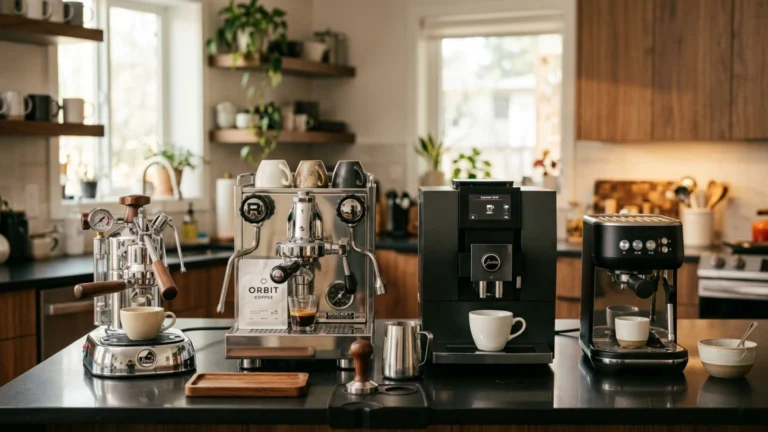
What Is PID Temperature Control in an Espresso Machine?
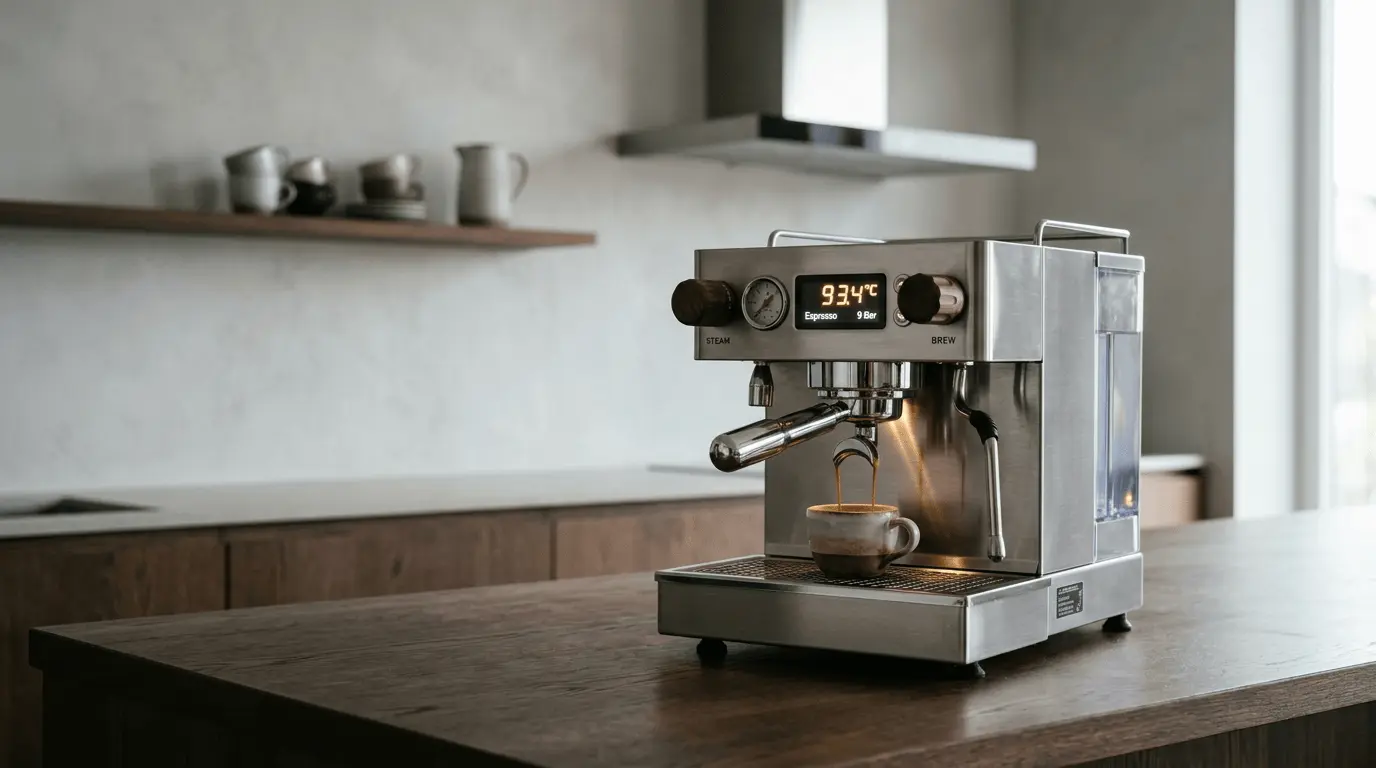
If you have compared espresso machines, you have probably seen the term PID temperature control. Many manufacturers highlight it as an important feature, especially on mid-range and premium machines.
But what does PID actually do? Does it make better espresso? And is it worth paying extra for?
PID stands for Proportional-Integral-Derivative. It is a control system that monitors temperature and adjusts the heating process to keep water closer to a target temperature.
This matters because espresso extraction depends partly on water temperature. More consistent temperature can make your shots more repeatable and help you dial in your coffee more easily.
However, PID is not a magic feature. It cannot fix a poor grinder, incorrect grind size, or bad puck preparation. Understanding its purpose will help you decide whether you need it in your next espresso machine.
What Is PID Temperature Control?
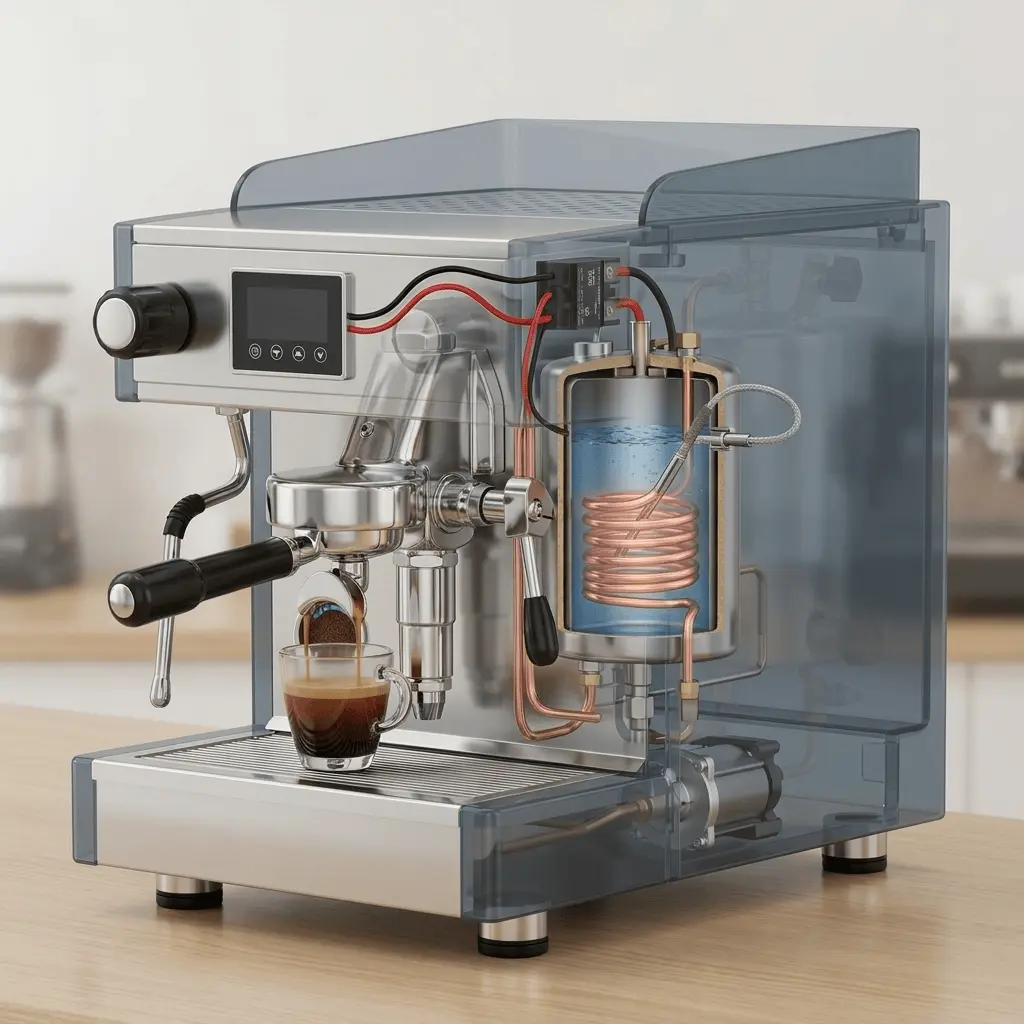
PID temperature control is an electronic system that regulates the temperature inside an espresso machine. It uses a temperature sensor to measure current conditions and a controller to adjust the heating process.
Instead of relying only on a basic on-and-off thermostat, a PID controller makes more precise adjustments to maintain the selected temperature.
For example, suppose you set your espresso machine to 200°F. The PID system monitors the temperature and adjusts heating activity to keep it close to that target.
The exact level of stability depends on the machine’s design, sensor placement, heating system, and control settings. A PID does not guarantee that the water reaching the coffee puck always matches the displayed temperature. Understanding this feature is easier when you first learn about the different types of espresso machines and their heating systems.
Manufacturers use PID systems to improve temperature consistency during brewing. Some machines also use PID control for steam or other heating functions.
What Does PID Stand For?
PID is short for:
- Proportional
- Integral
- Derivative
These three components work together to help the controller respond to temperature changes.
You do not need to understand advanced mathematics to use a PID espresso machine. However, knowing what each component does makes the technology easier to understand.
1. Proportional control
The proportional component responds to the difference between the current temperature and the target temperature.
If the temperature is far below the target, the controller responds more strongly. As the temperature gets closer, the response becomes smaller.
This helps the machine react to the current temperature error.
2. Integral control
The integral component considers how long a temperature error has continued.
For example, the machine might remain slightly below the target for a period of time. The integral component helps account for that ongoing difference and correct it.
This reduces the chance of a small, persistent temperature error.
3. Derivative control
The derivative component considers how quickly the temperature is changing.
If the temperature is rising rapidly toward the target, the controller can adjust its response to reduce overshooting. This helps the system respond to changing conditions.
In practice, the three components work together through a feedback-control system. The controller uses temperature readings to determine how the heating system should respond.
How Does PID Temperature Control Work in an Espresso Machine?
A PID system uses feedback. It measures the current temperature, compares it with the target, and adjusts the heating process.
Here is a simplified explanation of the process.
- You select a temperature
Some espresso machines allow you to set a specific brew temperature through buttons, a display, or a control dial. - A sensor measures temperature
The sensor monitors the temperature at a specific location, such as the boiler or another part of the heating system. - The controller compares the readings
The PID controller compares the measured temperature with the target value. - The heating system adjusts
The controller changes the heating activity based on the temperature difference and how that difference is changing. - The system continues monitoring
The controller repeats this process to help maintain a more stable temperature.
A PID system can regulate heating more precisely than a basic thermostat.
However, the result depends on the complete espresso machine, not just the presence of a PID controller.
Some machines use a PID to control a boiler. Others use different heating designs, such as thermoblocks or thermocoils, with electronic temperature management.
PID vs. a Traditional Thermostat
A traditional thermostat usually operates within a temperature range. It turns the heating element on when the temperature drops below a set point and turns it off after reaching a higher threshold.
This simple approach works, but it allows temperature fluctuations. Imagine a machine designed to maintain a particular brewing temperature:
- The heater raises the water temperature.
- The thermostat switches the heater off.
- The water temperature gradually drops.
- The thermostat activates the heater again.
The heating cycle repeats as the temperature moves between the thermostat’s activation and shutoff points.
A PID temperature control uses more detailed feedback to regulate heating. Depending on the design, it can adjust the timing or power delivered to the heating element rather than relying only on broad on-and-off cycles.
PID vs. Thermostat: Comparison
| Feature | PID temperature control | Traditional thermostat |
| Control method | Feedback-based electronic control | Usually threshold-based control |
| Temperature monitoring | Uses sensor feedback | Uses a temperature-sensitive control |
| Heating adjustments | Can make more precise corrections | Typically switches heating on or off |
| Temperature stability | Often improves consistency | Can allow wider temperature swings |
| User temperature adjustment | Common on some PID machines | Often limited or unavailable |
| Cost and complexity | Usually adds components and complexity | Generally simpler |
A traditional thermostat is not automatically bad. Many espresso machines can produce good coffee without PID control. The difference is how the machine manages temperature and how much control it provides.
Why Is Temperature Stability Important for Espresso?
Temperature affects how water extracts compounds from ground coffee. The relationship is complex, but temperature is one of the variables that can change espresso’s flavor.
When other variables remain consistent, changing the brewing temperature can affect extraction and the balance of flavors.
Depending on the coffee and recipe, temperature changes may influence:
- Acidity
- Bitterness
- Sweetness
- Body
- Overall extraction balance
Water that is too cool may contribute to under-extraction. Water that is too hot may produce an unpleasant or overly bitter result in some circumstances.
However, there is no single temperature that works perfectly for every coffee. Different beans, roast levels, grind settings, and recipes may require different approaches.
A PID helps you control one variable more consistently. That can make it easier to repeat a recipe and understand how other adjustments affect your espresso. The important point is that temperature stability supports consistency; it does not guarantee excellent flavor.
What Are the Benefits of PID Temperature Control?
PID temperature control can provide several practical benefits for home espresso users.
1. More consistent brewing temperature
The primary benefit is improved temperature regulation.
A PID controller continually monitors temperature and adjusts the heating system. This can reduce temperature variation compared with a basic thermostat. More consistent temperature gives you a more predictable starting point for each shot.
The actual performance varies between machines. Boiler size, group design, water flow, sensor location, and warm-up time all affect temperature stability.
2. Easier espresso dialing in
Dialing in means adjusting your coffee preparation to achieve a better result.
You may change:
- Grind size
- Coffee dose
- Extraction time
- Brew ratio
- Water temperature
If the temperature changes significantly between shots, it becomes harder to understand the effect of your other adjustments. A PID temperature control can reduce temperature variation and make the dialing-in process easier to follow.
For example, if your grind size stays the same but your espresso tastes different, temperature is one factor you can investigate. PID control helps you keep that factor more consistent.
3. Greater control over different coffee beans
Some espresso machines with PID systems allow you to change the brewing temperature. This can be useful when experimenting with different roasts and coffee blends. You can test a recipe at one temperature and compare it with another.
Temperature adjustment is especially useful for users who enjoy experimenting. Beginners can also benefit, but they do not need to change temperature settings constantly.
Start with a reasonable setting and learn how grind size, dose, and extraction time affect the result.
4. Less dependence on temperature surfing
Some traditional single-boiler espresso machines require users to manage temperature manually. This practice is often called temperature surfing. It involves using the machine’s heating cycle and flushing process to reach a more predictable brewing condition.
Temperature surfing can help users work around thermostat limitations. However, it adds another step to the brewing process.
A properly implemented PID can reduce the need for this technique by providing more direct temperature regulation.
Not every non-PID machine requires temperature surfing in the same way. The process depends on the machine’s heating system and operating instructions.
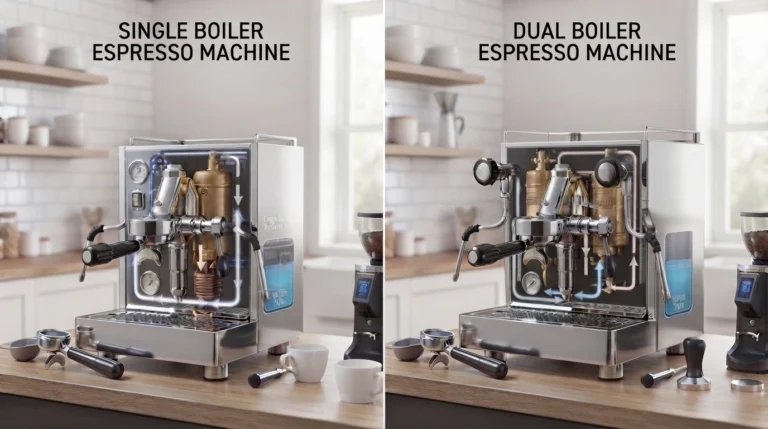
For a deeper explanation of boiler systems, read our guide to single-boiler and dual-boiler espresso machines. It explains how these designs differ and how they affect brewing and steaming.
Does PID Make Better-Tasting Espresso?
PID can help you produce more consistent espresso, but it does not automatically make every shot taste better. Espresso quality depends on several factors working together. Temperature is only one part of the process.
Other important variables include:
- Coffee freshness
- Grinder quality
- Grind size
- Coffee dose
- Distribution
- Tamping
- Brew ratio
- Extraction time
- Water quality
- Machine warm-up
- Group and portafilter temperature
A machine with PID control can still produce poor espresso if the coffee is ground incorrectly or the puck is prepared unevenly.
Likewise, a machine without PID can produce enjoyable espresso when the user understands its behavior and prepares the coffee carefully.
PID is best viewed as a tool for repeatability and control, not as a replacement for good brewing technique.
PID Does Not Control Everything
One common misunderstanding is that PID controls every aspect of espresso extraction. It does not.
A typical PID temperature control focuses on temperature regulation. It does not automatically control all of the following:
| Variable | Does a standard PID control it? |
| Water temperature | Yes, within the system’s design |
| Grind size | No |
| Coffee dose | No |
| Tamping pressure | No |
| Distribution | No |
| Brew pressure | Not necessarily |
| Flow rate | Not necessarily |
| Extraction ratio | No |
| Milk texture | Not by default |
Some advanced espresso machines combine PID control with additional systems. These may include pressure profiling, flow control, programmable dosing, or automatic milk steaming.
Those features are separate from basic PID temperature regulation.
When comparing machines, check each feature individually. Do not assume that a machine with PID automatically includes advanced pressure or flow control.
PID vs. Fast Heat-Up Technology
PID temperature control and fast heat-up technology are not the same thing. PID focuses on temperature regulation, while fast-heating technology focuses on how quickly the machine reaches operating temperature.
For example, a machine may heat up quickly but offer limited user temperature adjustment. Another machine may provide PID control but require a longer warm-up period because of its boiler design. Some machines offer both features.
Comparison
| Feature | PID temperature control | Fast heat-up system |
| Main purpose | Maintain a target temperature | Reach operating temperature quickly |
| Primary benefit | Temperature consistency | Reduced waiting time |
| Focus | Regulation during operation | Heating speed |
| Guarantees stable brewing temperature? | Not by itself | No |
| Can exist without the other? | Yes | Yes |
Breville’s ThermoJet system is an example of fast-heating technology. It should not automatically be treated as the same feature as PID control.
When shopping, check the manufacturer’s specifications to understand how the machine handles heating and temperature management.
If counter space and warm-up time are important to you, explore our guide to the best compact espresso machines. It covers machine size, practical features, and considerations for smaller kitchens.
Can You Adjust the Temperature on a PID Espresso Machine?
Some PID espresso machines allow you to adjust the brew temperature. Others use a PID system internally but provide limited or no direct temperature adjustment to the user. The available controls depend on the model.
A machine might offer:
- A digital temperature display
- Up and down temperature buttons
- A control dial
- Preset temperature settings
- Temperature adjustment through a menu
- Internal temperature regulation without user controls
Do not assume that every machine with PID lets you set an exact temperature.
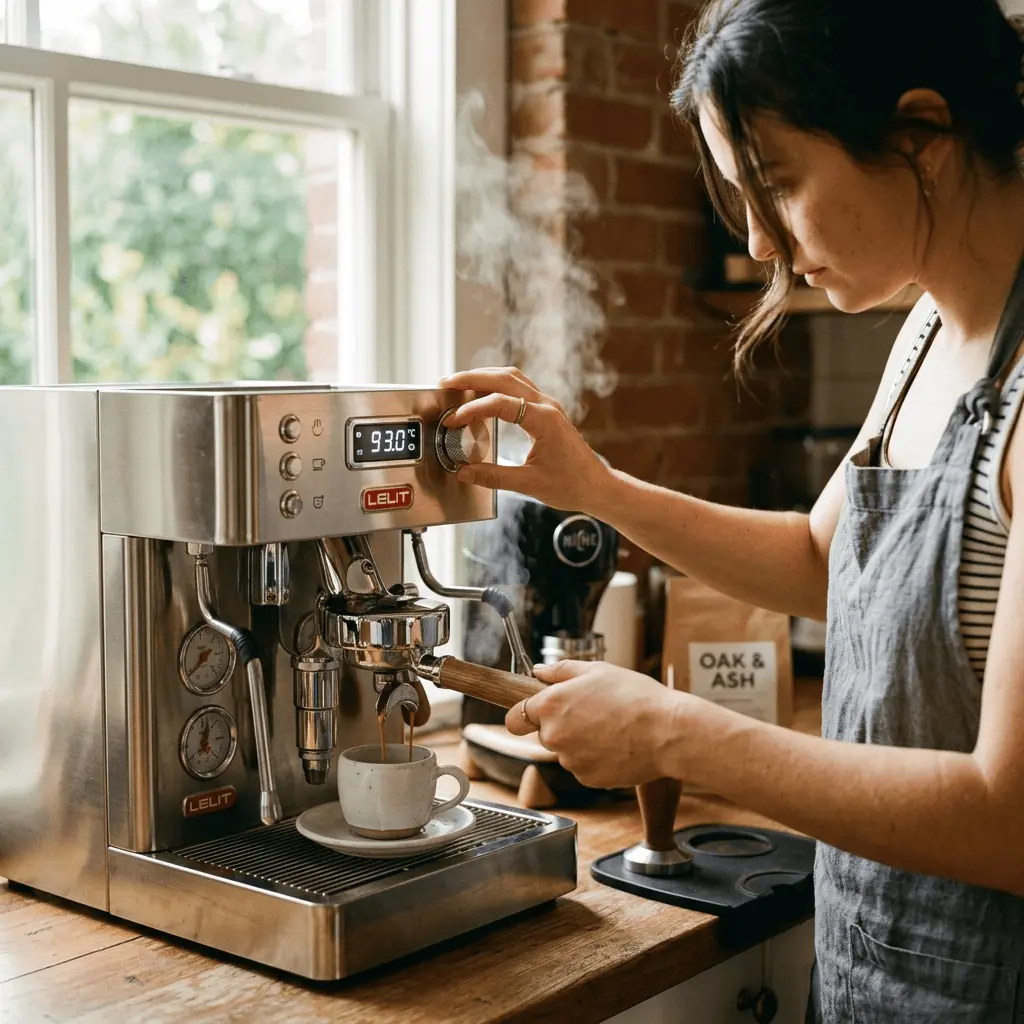
Before buying, check the manufacturer’s documentation and product specifications. Look for information about the adjustable temperature range, control interface, and which component the PID regulates.
Why temperature adjustment can be useful
Temperature adjustment can help you experiment with different coffees.
You might try a slightly different setting when working with a light roast, medium roast, or darker blend. However, the ideal setting depends on the specific coffee and brewing recipe.
A higher temperature is not automatically better. Start with the manufacturer’s recommended settings and make small changes while keeping other variables consistent.
Does Every Espresso Machine With PID Have the Same Performance?
No. The term PID describes a control method, not a universal performance standard. Two espresso machines can both include PID temperature control but produce different results.
Their performance may vary because of:
- Boiler or thermoblock design
- Heating element capacity
- Sensor location
- Temperature calibration
- Group head construction
- Water flow
- Machine warm-up
- Insulation
- Software settings
- Brewing volume
A PID sensor may monitor the temperature inside a boiler, but that does not necessarily equal the temperature at the coffee puck.
The water can lose or gain heat as it moves through the machine. The group head, portafilter, and brewing environment also affect the final extraction temperature.
For this reason, avoid judging machines only by the phrase “PID temperature control.” Consider the complete heating system and independent testing when available.
How to Check Whether an Espresso Machine Has PID
Manufacturers do not always describe temperature control in the same way. You should look for specific information rather than relying on vague marketing claims.
Check the product specifications
Look for phrases such as:
- PID temperature control
- Digital temperature control
- Programmable brew temperature
- Electronic temperature regulation
- Brew temperature adjustment
A manufacturer may describe the technology without using the exact word PID. However, you should confirm the meaning through the product manual or official specifications.
Check what the PID controls
A PID might regulate:
- Brew boiler temperature
- Steam boiler temperature
- Thermoblock heating
- Another heating component
These functions are not interchangeable. For example, a machine might use PID control for brewing but manage steam temperature through a separate pressure-based system.
Look for temperature adjustment options
If temperature customization matters to you, check whether the machine allows user adjustments.
A product listing that says “PID” does not automatically confirm that the user can select a specific temperature.
Check independent testing carefully
Independent reviews may measure temperature stability using thermometers, probes, or data-logging equipment. These tests can provide useful information, but test methods differ.
Compare results carefully and check whether the reviewer measured boiler temperature, group temperature, or water temperature during extraction.
Is PID Temperature Control Worth It for Beginners?
PID can be useful for beginners, but it is not an essential requirement for learning espresso. Your budget, experience, and preferred brewing process should guide your decision.
PID may be useful if:
- You want repeatable espresso shots.
- You enjoy experimenting with different coffees.
- You want to adjust brew temperature.
- You prefer not to manage temperature surfing.
- You plan to develop your espresso skills over time.
- You want better control over one part of the brewing process.
You may not need PID if:
- You have a limited budget.
- You are purchasing your first espresso machine.
- You prefer a simple brewing setup.
- You are comfortable using the manufacturer’s recommended workflow.
- You would benefit more from investing in a better grinder.
- You do not plan to experiment with temperature settings.
A beginner should consider the entire setup instead of paying extra for one specification. A machine with a good grinder, stable workflow, reliable construction, and useful controls may be more practical than a machine that offers PID but has weaknesses elsewhere.
If you are purchasing your first machine, our guide to the best espresso machines for beginners can help you compare practical options and important features.
Is PID More Important Than a Good Grinder?
For many home espresso users, a good grinder is one of the most important parts of the setup. A grinder affects grind consistency, particle distribution, and your ability to make precise adjustments. These factors strongly influence extraction.
PID control cannot compensate for a grinder that produces inconsistent grounds. If you are comparing two machines, consider how the overall budget is divided between the espresso machine and grinder.
For example:
- A machine with PID and a weak grinder may limit your results.
- A machine without PID and a capable grinder may still produce good espresso.
- A machine with PID and a suitable grinder gives you both temperature regulation and better control over grind size.
The best choice depends on whether you are buying a machine with a built-in grinder or planning to use a separate grinder.
Before spending extra money on PID temperature control, it is worth understanding why a grinder matters for espresso and whether you need a separate grinder for your machine.
Can You Add PID to an Espresso Machine Later?
Some espresso machines can be modified with aftermarket PID kits. This is more common among enthusiasts who want greater temperature control from compatible machines.
However, an aftermarket PID installation is not the same as buying a machine with factory-installed PID control. Possible considerations include:
- Machine compatibility
- Electrical safety
- Installation complexity
- Warranty implications
- Sensor placement
- Controller quality
- Long-term reliability
Opening an espresso machine can expose you to electrical components and hot surfaces. Improper installation may damage the machine or create a safety risk.
For most beginners, buying a machine with the desired temperature-control features from the manufacturer is the simpler option.
If you are considering an aftermarket modification, follow the manufacturer’s guidance where available and use a qualified technician when necessary.
Common Misunderstandings About PID
Myth 1: PID guarantees perfect temperature
Reality: PID can improve temperature regulation, but it does not guarantee that the brewing water remains at an exact temperature under every condition.
Machine design, sensor position, water flow, and heating capacity all affect performance.
Myth 2: Every PID machine allows temperature adjustment
Reality: Some machines offer adjustable temperature settings, while others use PID internally without giving users direct control.
Always check the product manual and specifications.
Myth 3: PID replaces the need for a good grinder
Reality: PID manages temperature. It does not improve grind consistency or puck preparation.
A grinder remains important for producing repeatable espresso.
Myth 4: A machine without PID cannot make good espresso
Reality: Many espresso machines without PID can produce good coffee. Users may need to understand the machine’s heating behavior and workflow.
PID is an additional control feature, not a requirement for every home barista.
Myth 5: PID and fast heating mean the same thing
Reality: PID regulates temperature, while fast-heating technology reduces the time needed to reach operating temperature. Some machines offer both, but they serve different purposes.
What Temperature Should You Use for Espresso?
There is no universal temperature that works for every coffee. A common starting range for espresso brewing is around 195–205°F (90–96°C), but the appropriate setting depends on the coffee, machine, and recipe.
Use the manufacturer’s recommended range as a starting point. You can then experiment with small adjustments while keeping other variables consistent.
For example:
- Choose a brew temperature.
- Keep your coffee dose consistent.
- Keep your grind setting consistent.
- Record extraction time and taste.
- Change one variable at a time.
Do not assume that a higher temperature will always improve extraction. Your coffee may respond differently depending on its roast level, processing method, freshness, and preparation.
A PID machine can make these experiments easier because it helps you control the temperature variable more consistently.
Pros and Cons of PID Temperature Control
Pros
Cons
Do You Need PID in Your Espresso Machine?
You do not need PID to make good espresso at home. However, it can be a useful feature if you want more consistent temperature control and greater control over your brewing process.
PID is particularly relevant when you want to:
- Repeat the same recipe more reliably.
- Experiment with different brew temperatures.
- Reduce the effect of temperature fluctuations.
- Develop your espresso skills.
- Avoid manually managing temperature on some traditional machines.
If you have a limited budget, compare PID with other important features. A good grinder, suitable machine design, reliable steam performance, and ease of use may matter more for your situation.
For beginners, PID is best considered a helpful feature rather than a mandatory specification.
Final Thoughts
PID temperature control helps an espresso machine regulate its heating system more precisely than a basic thermostat. By monitoring temperature and making adjustments, it can reduce temperature variation and provide a more repeatable brewing process.
That does not mean every PID machine performs identically. The complete machine design, heating system, sensor location, and user controls all influence the results.
If you enjoy experimenting with espresso, PID can make temperature adjustments and recipe testing easier. If you are buying your first machine on a tight budget, you can still learn and make enjoyable espresso without it.
Focus on the features that match your experience, budget, and brewing goals. PID is valuable because it improves control—not because it guarantees perfect espresso.